Beginning Sounds Letter Activity Pages!
Write Your Way to Reading at the Phonics Pen Pal Workshop!
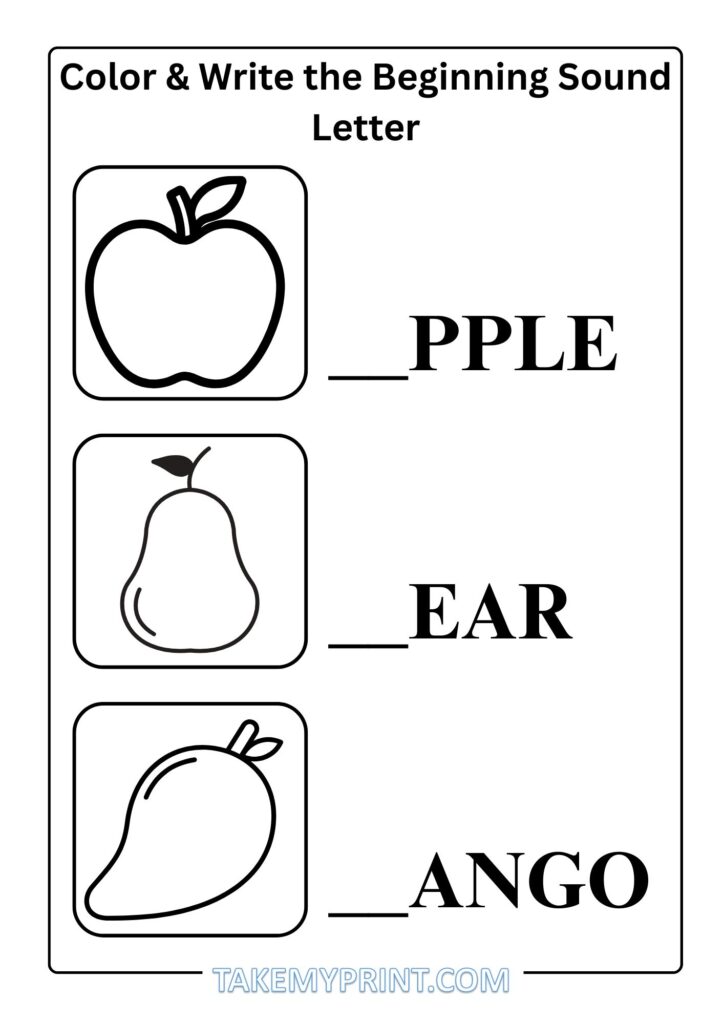
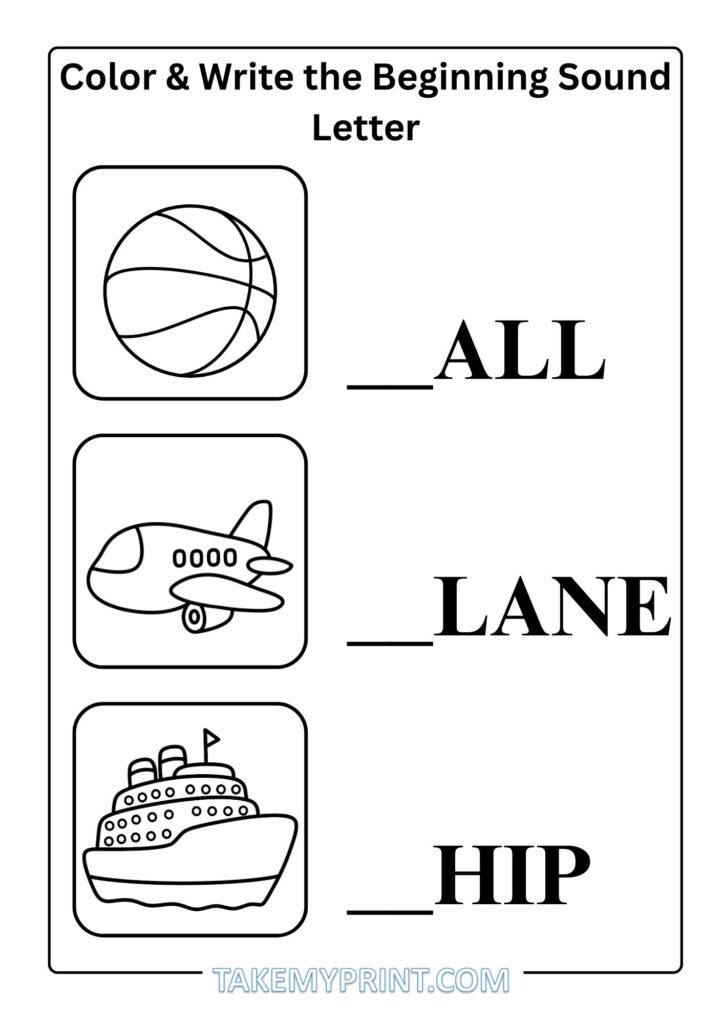
Welcome to the ultimate hub for free printable Beginning Sound Writing worksheets! If your child has mastered recognizing letters and is ready to start writing them, you’re in the right place. Our “Fill-in-the-Blank” activities challenge young learners to move beyond just pointing—they get to become little authors by completing words with the correct initial letter.
Why Our “Write the Letter” Activities Work:
-
Active Literacy: Moving from circling to writing the beginning sound bridges the gap between phonemic awareness and actual spelling. It’s a major “lightbulb moment” for early readers!
-
Picture-to-Print Connection: Each worksheet features clear, recognizable illustrations. Kids identify the image, say the word aloud, and translate that sound into a written letter in the blank provided.
-
Handwriting Heroics: These pages provide focused practice for both uppercase and lowercase letter formation within the context of real words, reinforcing muscle memory.
-
Instant Learning Kits: Our high-resolution, no-prep PDFs are designed for busy teachers and parents. Just print, grab a pencil, and watch the vocabulary grow!
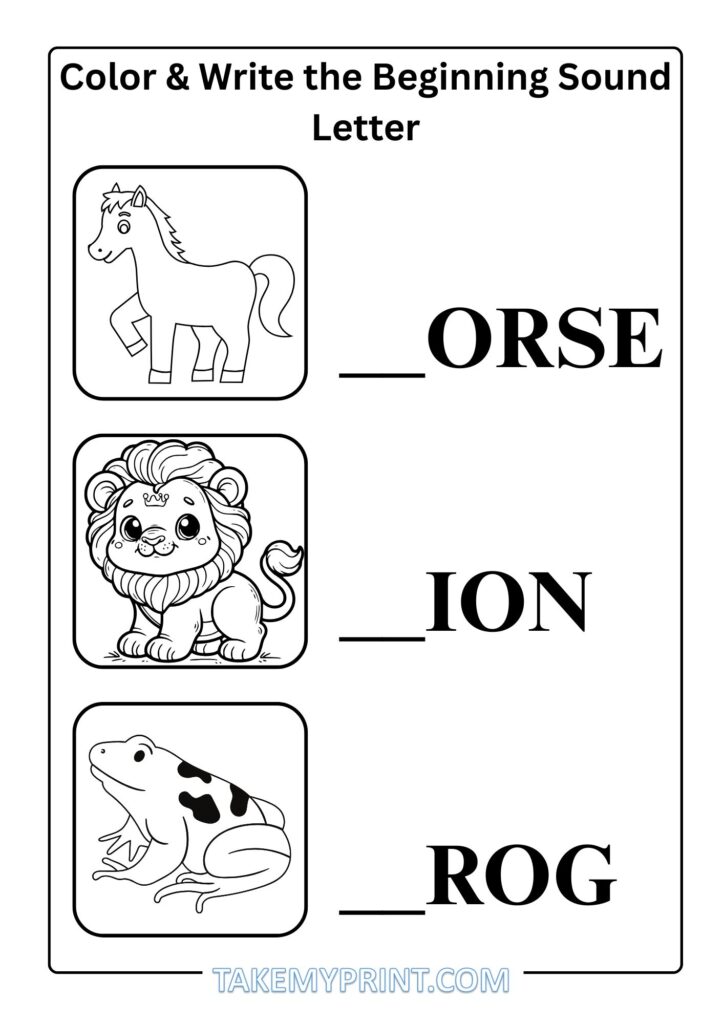
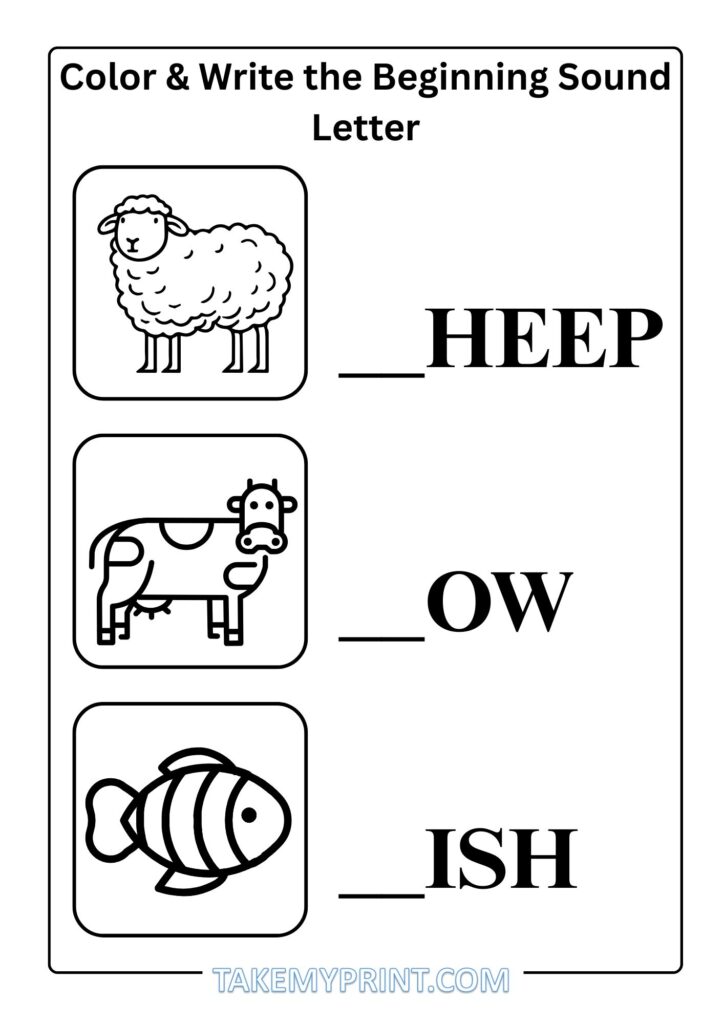
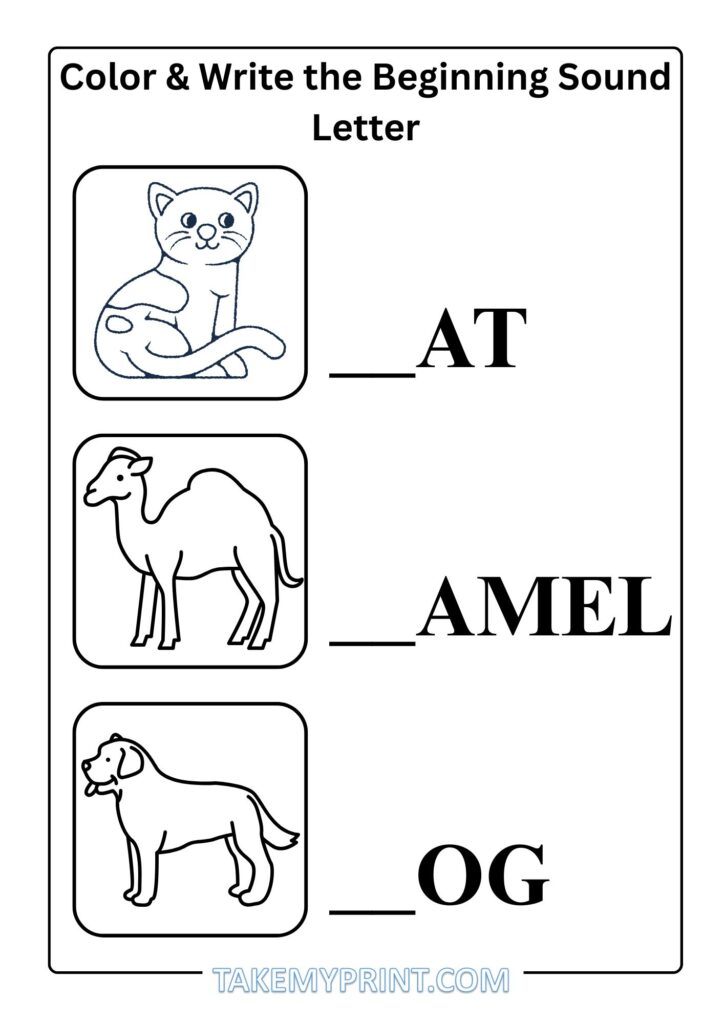
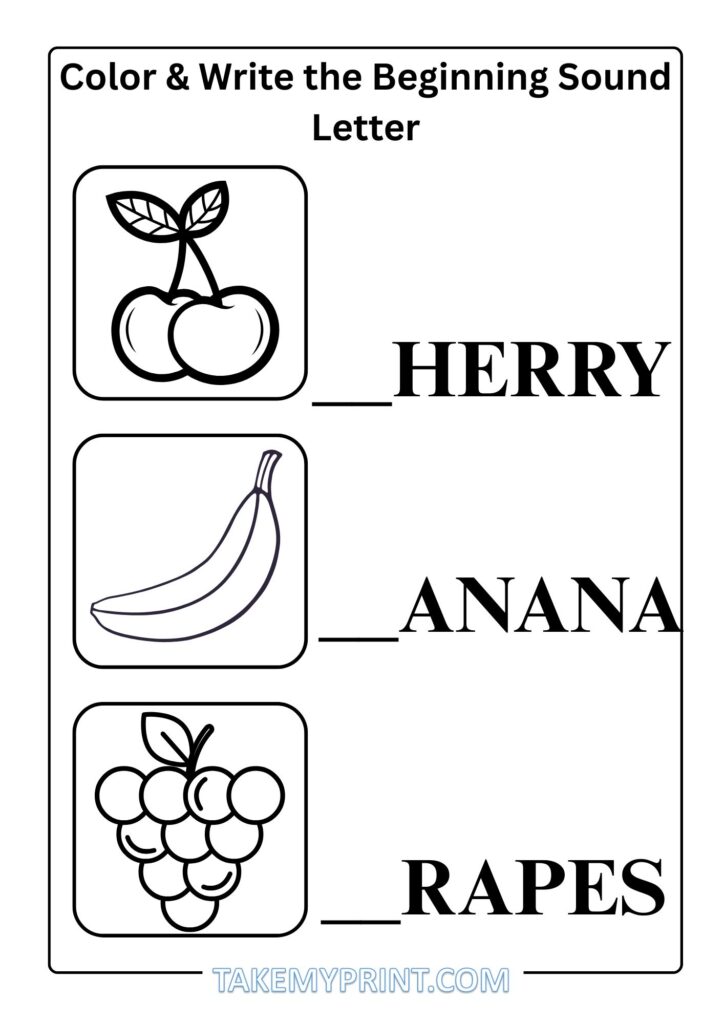
Free Printable Beginning Letter Sound Worksheets: Phonics & Early Reading Practice
Welcome to the beginning letter sound activity collection at TakeMyPrint! If you are searching for clear, structured, and engaging phonics worksheets for toddlers, preschoolers, and kindergarteners, you have arrived at the perfect place. Identifying beginning sounds—also known as initial phonemes—is one of the most critical early literacy milestones. Learning to connect the spoken sound at the start of a word to its written letter symbol lays the groundwork for reading, spelling, and fluent decoding.
We designed our wide array of downloadable PDFs to make foundational phonics feel like an exciting game of sound discovery. Whether your child is matching pictures to their starting letters, writing missing initial consonants, or coloring objects that share the same sound, our printables give parents, homeschoolers, and educators an effective, screen-free resource. Every worksheet features bold, clear illustrations and simple layouts that empower young learners to build reading confidence independently.
Why Beginning Letter Sound Activities Are Essential for Early Readers
Listening for the initial sound in a word and pairing it with a letter digit is a core component of phonemic awareness. Here is why consistent practice with beginning sound worksheets plays such a vital role in early childhood education:
1. Building Phonemic Awareness and Speech Sound Isolation
Phonemic awareness is the ability to hear, identify, and manipulate individual sounds (phonemes) in spoken words. Isolating the very first sound—such as hearing the crisp “/b/” sound at the start of “ball”—is the easiest phonemic skill for young children to master. Practicing initial sound isolation sharpens auditory discrimination and improves speech clarity.
2. Strengthening the Alphabetic Principle and Early Decoding
The “alphabetic principle” is the understanding that written letters represent spoken sounds. Beginning letter sound worksheets explicitly connect visual images with written alphabet symbols. Mastering these initial letter-sound pairings provides the foundation children need to start blending sounds together into short CVC words (like “cat,” “dog,” and “pig”).
3. Expanding Vocabulary and Auditory Comprehension
As children examine illustrations to determine starting sounds, they naturally name objects, discuss picture traits, and learn new vocabulary words. Pairing visual images with spoken sounds strengthens word recall, listening comprehension, and early language development.
4. Enhancing Fine Motor Control and Writing Readiness
Many beginning sound sheets feature traceable letters or blank writing boxes for kids to write the initial consonant themselves. Guiding a pencil to form the correct starting letter combines phonics learning with fine motor training, helping kids transition smoothly from oral phonics to active writing.
Explore Our Collection of Printable Beginning Sound Sheets
To help you quickly locate the exact phonics skill builder your child needs, we organized our TakeMyPrint beginning letter sound category into targeted sub-categories:
Initial Sound Match & Clip Sheets: Classic worksheets where children look at a picture and draw a line to or circle the correct starting letter from a small letter bank.
Write the Missing Beginning Letter: Fill-in-the-blank practice sheets featuring simple CVC words missing their first letter (e.g., “_at” with a picture of a cat).
Beginning Sound Color & Search: Fun coloring pages where children hunt for and color only the pictures that start with a specific target sound (e.g., “Color all pictures starting with ‘M'”).
Cut-and-Paste Phonics Sorting: Interactive hands-on activity sheets where kids cut out small pictures and paste them under the correct matching letter column.
Alphabet Sound Summary Sheets (A to Z): Comprehensive 26-page sets dedicated to one letter at a time, packed with pictures and letter-formation practice for focused daily review.
Creative Ways to Use Beginning Sound Sheets Beyond Crayons
Phonics practice is most effective when it is interactive, tactile, and playful! Here are four budget-friendly ways to transform simple printable worksheets into multi-sensory learning games:
Laminate for Reusable Daily Phonics Warm-Ups:
Slide printed sheets into clear plastic sheet protectors or run them through a home laminator. Kids can write missing starting letters using dry-erase markers, wipe them clean with a cloth, and reuse them daily for ongoing phonics practice.
Incorporate Alphabet Magnet and Tile Manipulatives:
Instead of writing with a pencil right away, hand your child physical magnetic letters or wooden letter tiles. Challenge them to find the correct physical letter piece and place it directly over the picture that starts with that sound.
Use Bingo Stampers or Playdough Markers:
Swap out regular pencils for colorful Do-A-Dot stampers or playdough! Children love stamping a bright pop of color on the correct starting letter or smashing a playdough ball over the matching sound picture.
Play a Real-World “Sound Scavenger Hunt”:
After completing a beginning sound worksheet (such as a page focused on the letter “B”), take the sheet on a hunt around the room! Challenge your child to find physical objects nearby that start with that same sound—like a book, box, or button.
Frequently Asked Questions (FAQs)
Are all beginning letter sound worksheets on TakeMyPrint 100% free?
Yes! Every single phonics worksheet on TakeMyPrint is completely free to access, download, and print. You can freely use them for personal home practice, homeschooling phonics units, daycare centers, or kindergarten and preschool classroom lessons. Pick your desired sheet, open the high-res PDF, and print instantly.
At what age should children start learning beginning letter sounds?
Most children are ready to begin basic initial sound activities around ages 3.5 to 5 (preschool to kindergarten). Starting with distinct, continuous consonant sounds (like “M,” “S,” “F,” and “L”) makes sound isolation easier for beginners before moving to trickier stop sounds (like “T,” “P,” and “K”).