Circle The Odd One Activity Pages!
Welcome to our Interactive Puzzle Playground, the home of the best free printable “Odd One Out” worksheets for kids! If you’re looking for a fun, engaging way to sharpen your child’s critical thinking and visual discrimination skills, you’ve found the perfect spot. Our collection is carefully designed to turn a simple activity into a “brain-building” adventure that feels like a game!
Why Use Our Odd One Out Activity Pages?
-
Boost Early Literacy & Logic: Identifying the “odd one” helps preschoolers and kindergarteners master categorization and logical reasoning.
-
Expertly Crafted for Every Level: From simple picture-based puzzles for toddlers to complex logic challenges for elementary students.
-
Perfect for Home or School: Whether you need a quick no-prep classroom warm-up, a homeschooling resource, or a rainy-day activity, these PDF printables are ready in one click.
-
Diverse Themes: Explore categories like animals, food, shapes, and colors—keeping every search fresh and exciting!
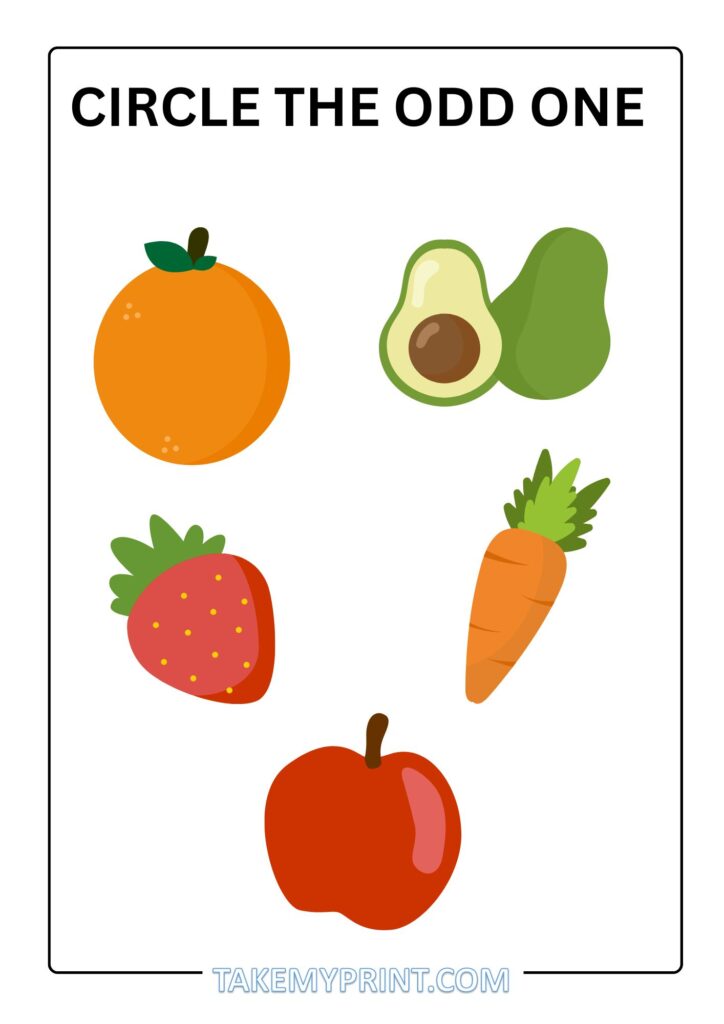
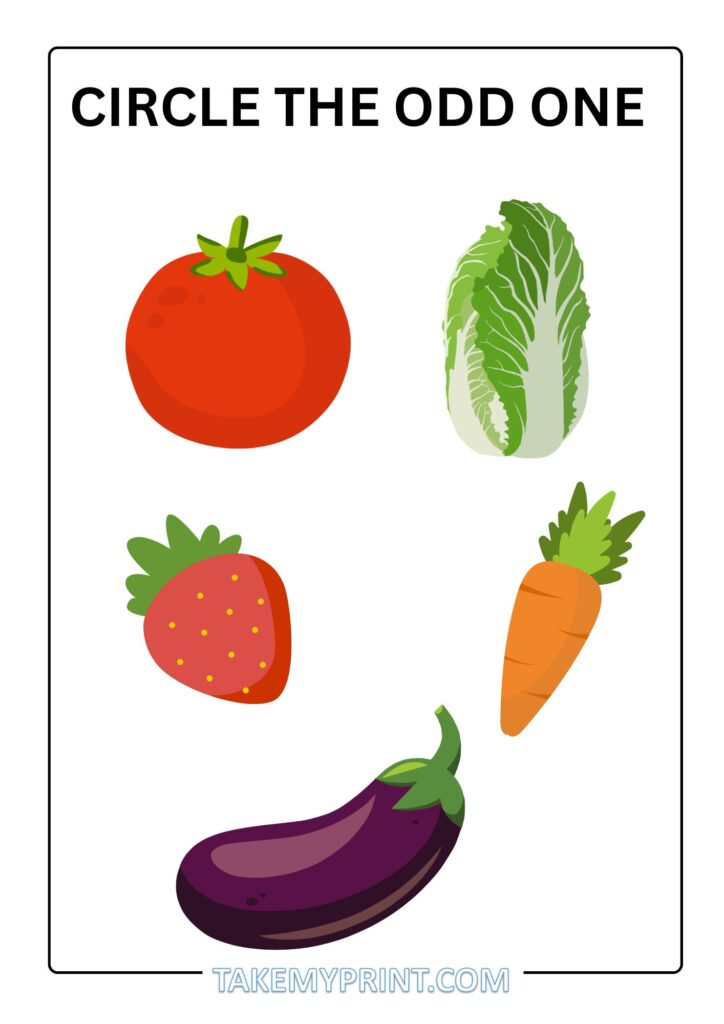
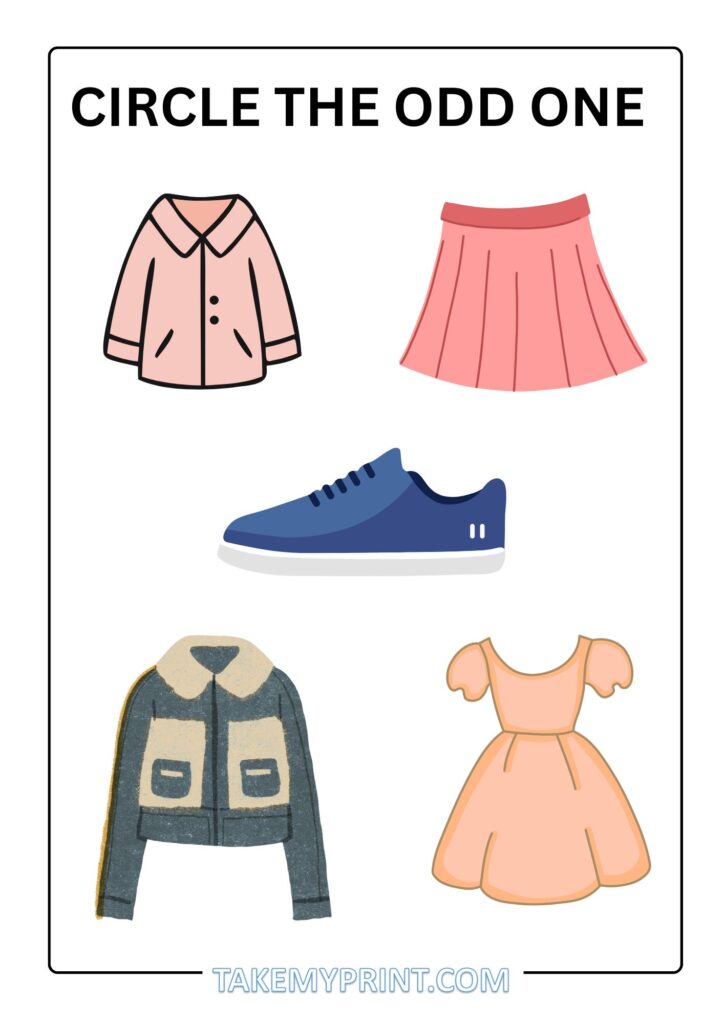
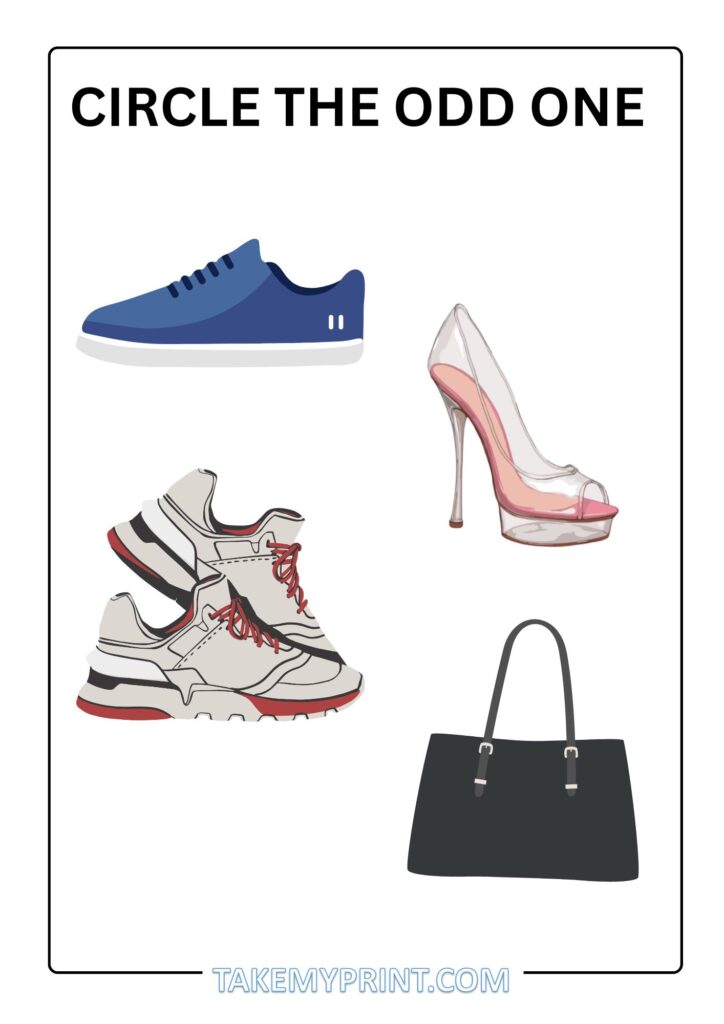
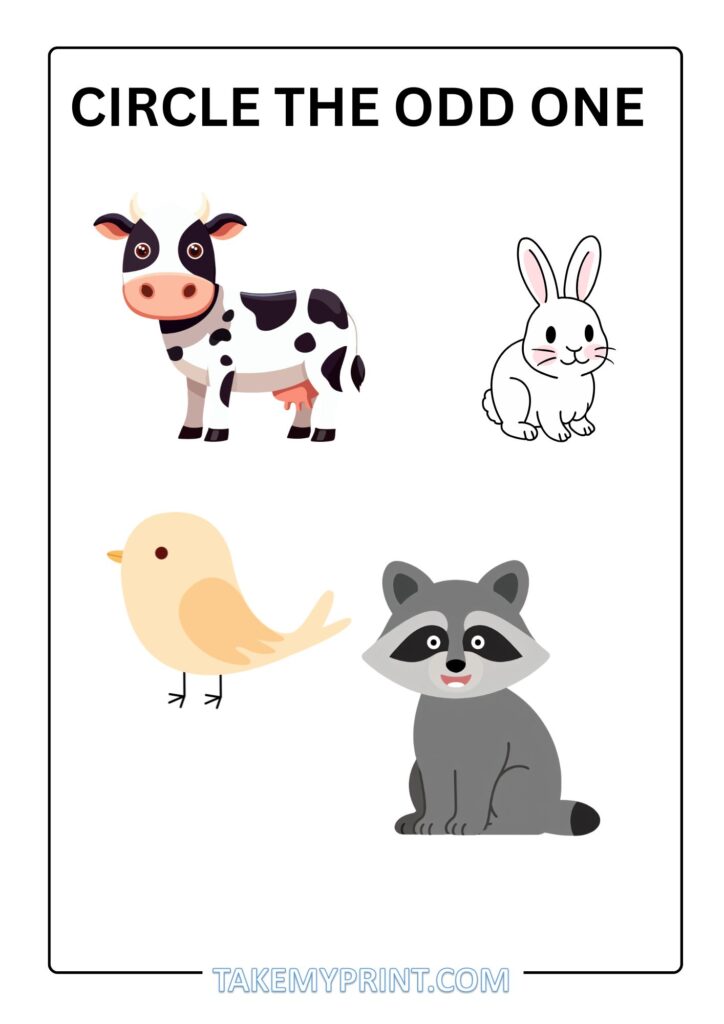
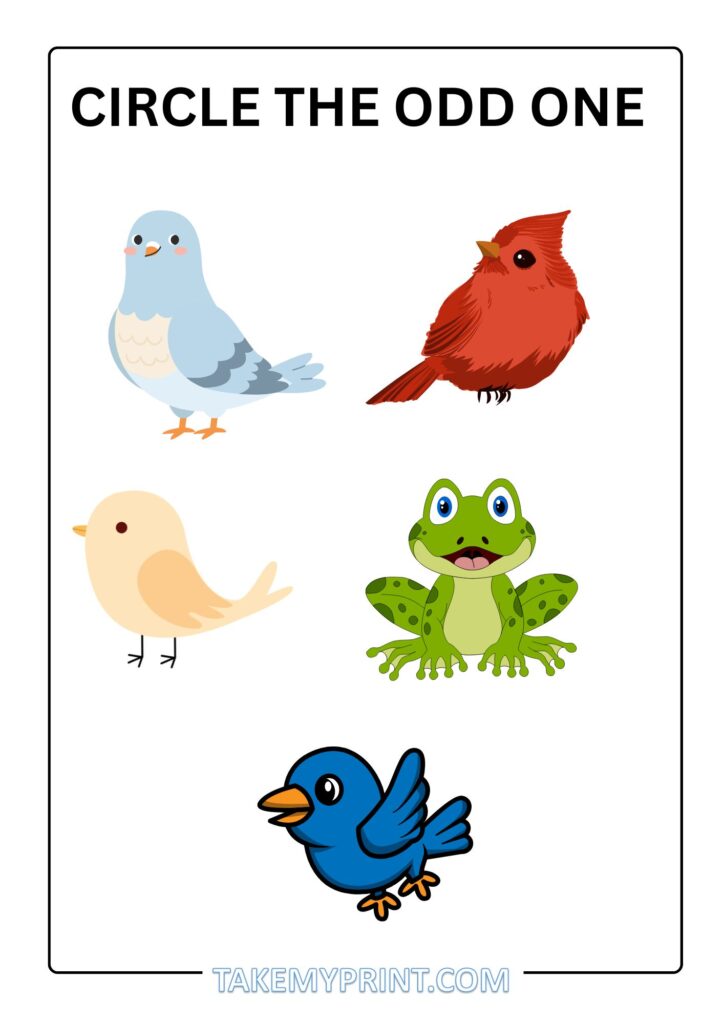
Free Printable Circle the Odd One Out Worksheets: Logic, Sorting & Visual Discrimination Fun
Welcome to the “Circle the Odd One Out” activity collection at TakeMyPrint! If you are searching for fun, engaging, and brain-boosting worksheets for toddlers, preschoolers, and kindergarteners, you have landed in the perfect place. Circle the odd one out worksheets are a foundational learning activity designed to challenge a child’s visual discrimination, logical reasoning, critical thinking, and problem-solving skills.
We designed our extensive collection of downloadable PDFs to transform early critical thinking into an exciting game of observation. Whether your child is spotting a different shape in a row, finding an animal that doesn’t belong in a farm group, or identifying the image facing the wrong direction, our printables give parents, homeschoolers, and educators an easy, effective, screen-free resource. Every sheet features bold, clean illustrations and simple layouts that empower children to work independently and build confidence.
Why "Circle the Odd One Out" Worksheets Are Essential for Early Learning
Scanning a row of images to figure out which one does not fit seems like simple fun, but behind the scenes, it engages several important cognitive and developmental pathways. Here is why practicing odd-one-out activities provides a powerful boost to early childhood growth:
1. Developing Visual Discrimination and Detail Observation
Visual discrimination is the ability to identify subtle differences and similarities between shapes, sizes, colors, and orientations. Before children can recognize differences between easily confused letters (like “b” and “d”) or numbers (like “6” and “9”), they need practice noticing differences in everyday pictures. Odd-one-out exercises train young eyes to examine details closely rather than rushing.
2. Strengthening Early Logic and Categorization Skills
To find the odd item, a child must first identify the common rule that connects the other items in the group (e.g., “these three are all fruits”). They then apply deductive reasoning to determine which item breaks that rule (e.g., “this one is a shoe, so it doesn’t belong”). This process of sorting and classifying builds a strong foundation for early science, math, and reading comprehension concepts.
3. Enhancing Visual Tracking and Left-to-Right Scanning
Reading and writing require smooth, structured eye movements across a page from left to right and top to bottom. “Circle the Odd One Out” rows naturally train children to scan systematically across each line, reinforcing proper reading orientation and improving visual focus.
4. Building Fine Motor Control and Hand Precision
Targeting a single specific image in a row and drawing a neat circle around it takes deliberate hand-eye coordination. Exercising this fine motor precision strengthens finger muscles and helps children refine pencil control needed for future handwriting activities.
Explore Our Collection of Printable "Odd One Out" Sheets
To help you quickly find the exact learning challenge your child needs, we organized our TakeMyPrint “Circle the Odd One Out” category into clear skill categories:
Basic Shape & Size Differences: Beginner-friendly pages where children spot the shape that is a different size, orientation, or form in a row.
Color & Pattern Sorting: Visual observation sheets focused on identifying the object with a distinct color shade, pattern, or fill design.
Category & Theme Logic: Concept-driven sheets where kids identify the item that does not belong in a real-world group (such as finding a vehicle among a group of animals).
Direction & Orientation Challenges: Advanced observation pages where all items look identical except for one facing left instead of right, or upside down.
Alphabet & Number Odd-One-Out: Early literacy and math prep sheets where children find the letter hidden in a row of numbers, or a lowercase letter in a row of uppercase characters.
Creative Ways to Use "Odd One Out" Sheets Beyond Crayons
Worksheet practice is most effective when kept interactive and hands-on! Here are four budget-friendly ways to transform simple printable sheets into dynamic learning games:
Laminate for Reusable Daily Brain Games:
Slide printed pages into clear plastic sheet protectors or run them through a home laminator. Kids can circle the odd items with bright dry-erase markers, wipe them clean with a cloth, and reuse them anytime without wasting paper.
Add Tactile Sensory Play with Counters or Playdough:
Instead of drawing pencil circles, have your child smash a small ball of playdough over the odd item in each row, or place a physical counting chip, button, or pom-pom on top. Adding physical movement keeps energetic toddlers engaged much longer.
Incorporate Bingo Daubers or Stampers:
Swap out lead pencils for colorful bingo stampers or Do-A-Dot markers! Kids love stamping a bold pop of color directly over the odd picture, turning critical thinking practice into a fun art project.
Encourage Verbal Reasoning & Storytelling:
Don’t just stop at circling the answer! Ask your child to explain why that specific item is the odd one out (e.g., “Because an apple is food and the rest are toys!”). Practicing verbal explanations strengthens vocabulary, expressive language, and logical reasoning skills.
Frequently Asked Questions (FAQs)
Yes! Every single activity worksheet on TakeMyPrint is completely free to access, download, and print. You can freely use them for personal family fun, homeschooling lessons, daycare centers, or preschool and kindergarten classroom activities. Simply select your desired sheet, open the high-resolution PDF, and print instantly.
At what age can children start doing “Circle the Odd One Out” worksheets?
Most toddlers and preschoolers can begin simple visual odd-one-out sheets around ages 2.5 to 4 years old (starting with simple size or shape differences). By ages 4 to 6 (preschool and kindergarten), children can easily tackle complex category sorting, direction flipping, and alphabet logic prompts.